The Solution
The Theater Ship “Lore & Lay”
The Theater Ship Lore & Lay is the largest private theater in Kiel — a converted cargo vessel that has been moored in the port for years and hosts performances without ever leaving its berth. As a permanent moorage, it is supplied with power via a 125 A shore connection.
Cause of the Corrosion
The ship’s electrical installation conforms to VDE standards — for a stationary theater ship without navigation service, this is permissible. The flip side: the steel hull is directly connected to shore potential via the protective earth (PE) conductor.
In harbor water, this creates the conditions for galvanic corrosion: hull, electrolyte (harbor water), and shore connection form a large-area galvanic cell. The potential difference drives direct currents through the hull and leads to continuous material loss from the steel.
Measurements before the intervention confirmed significantly elevated currents on the PE conductor. The sacrificial anodes were severely eroded — a clear sign that passive corrosion protection was chronically overloaded.
Phase 1: Isolation Transformer with Switchgear Cabinet
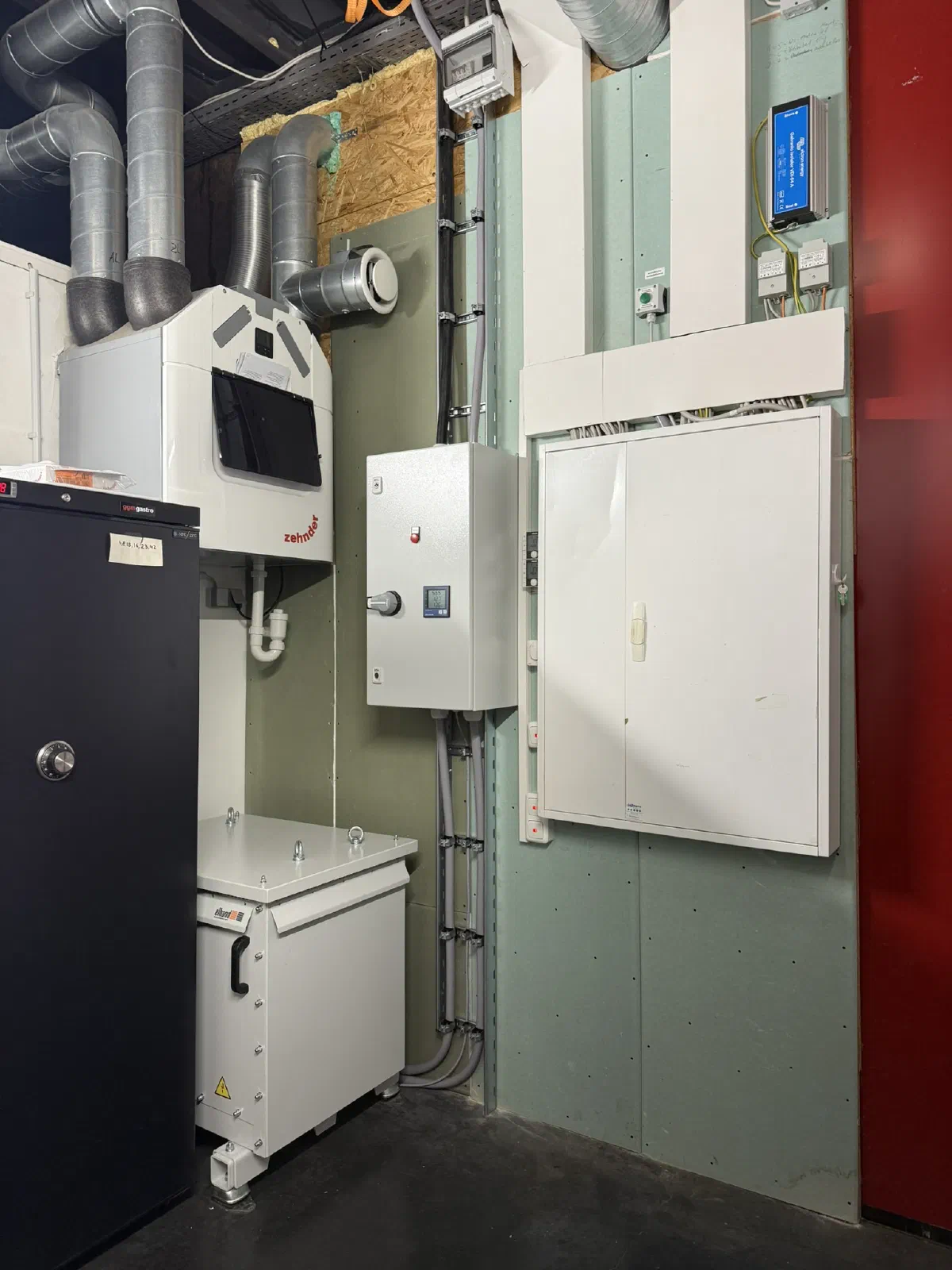
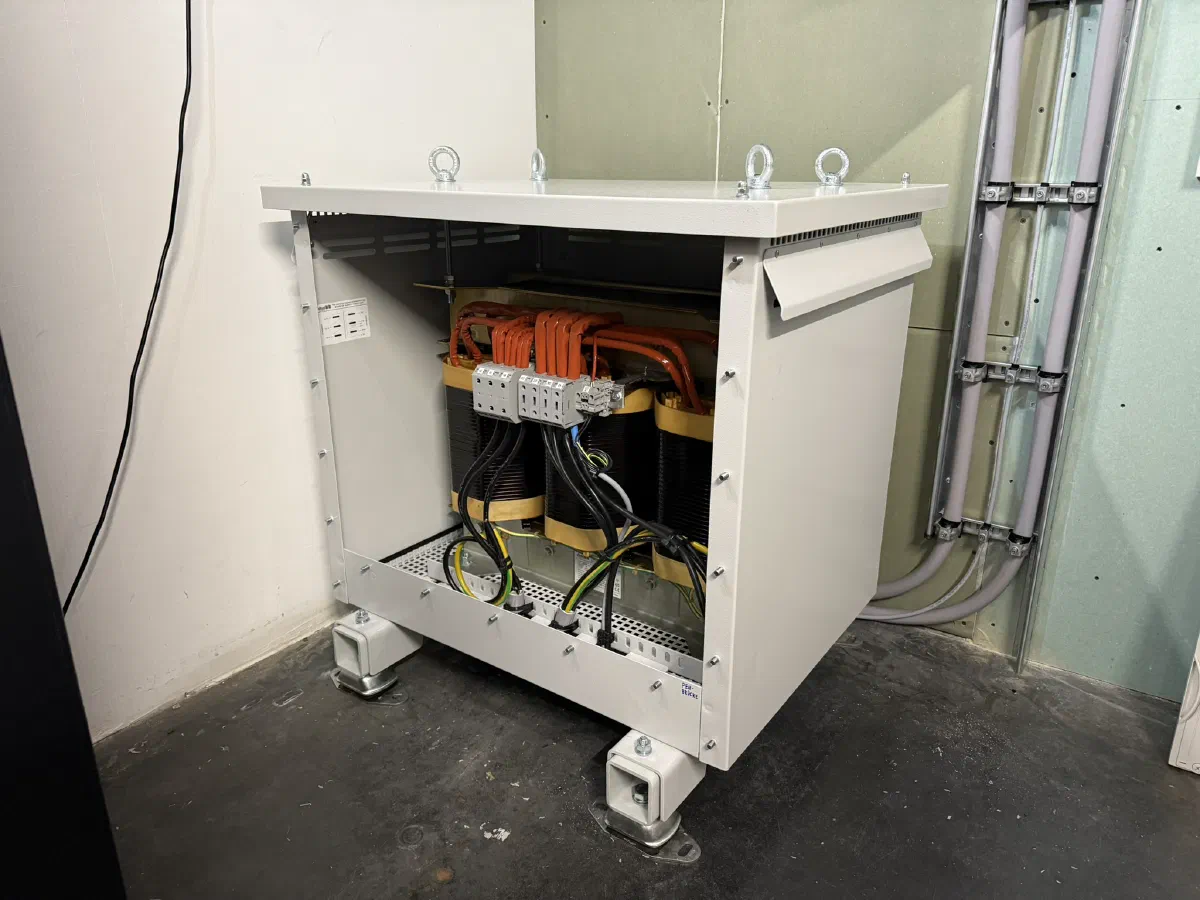
An isolation transformer solves the core problem: it galvanically decouples the ship-side grid from the shore grid. The ship continues to draw shore power — but without a conductive connection between the hull and shore potential.
Implemented:
- Planning and sizing of the isolation transformer (125 A design)
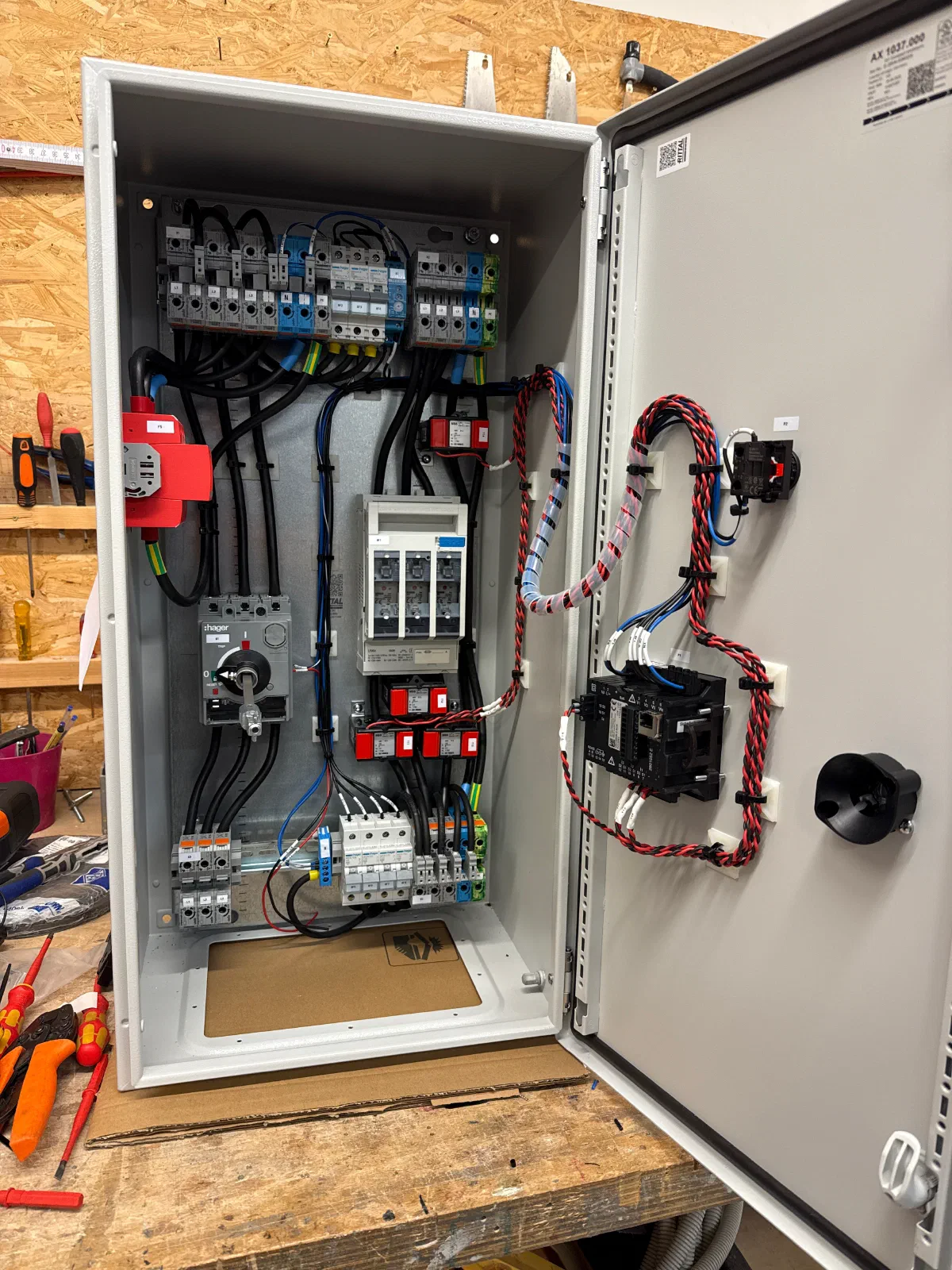
- Construction of a switchgear cabinet with protective and monitoring equipment
- Installation and commissioning at the deployment site on board
- Metrological verification of galvanic isolation after installation
Phase 2: New Main Distribution Board (in Planning)
The collaboration with the theater ship continues. In the next step, a new main distribution board will be installed that further upgrades the existing electrical installation on board.