The Solution
The Vessel
The ferry vessel is permanently moored in Hamburg and is currently used for other purposes. Two independent monitoring systems were retrofitted, sharing a common audible alarm.
Fill-Level Alarm for the Heating Oil Tanks
On board are two heating oil tanks — port and starboard. When refueling by tanker truck, it is critical that the pump is stopped in time before the tanks overflow.
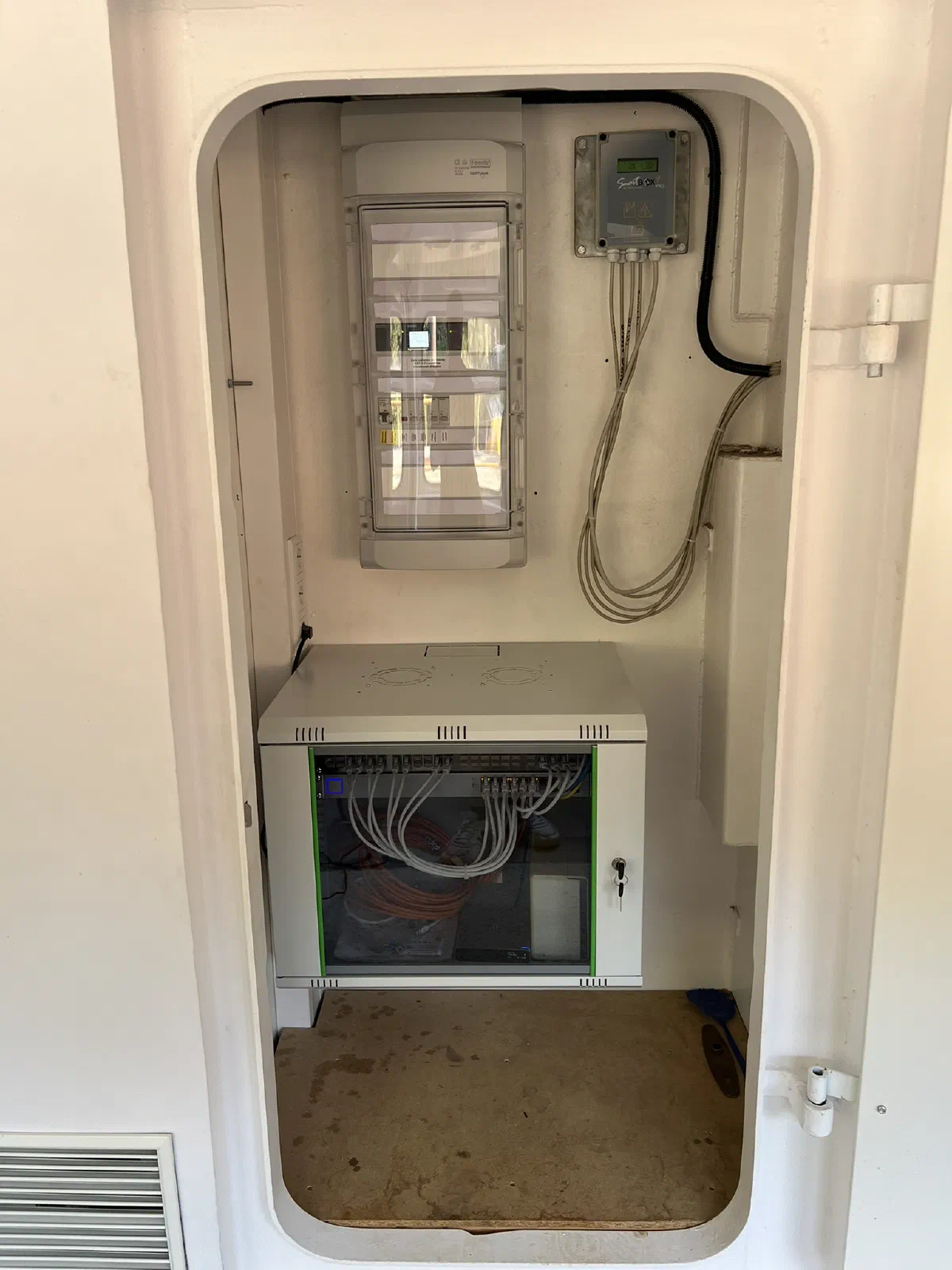
Installing classic limit switches — such as vibration limit switches or electrical probes — was not possible due to the tank construction. However, float switches were already installed in the tanks. These were utilized and integrated into the new signal chain. The alarm can be activated and deactivated separately for each tank.
When the fill level is reached, the float switch triggers the audible alarm — the signal for the tanker truck driver to shut off the pump.
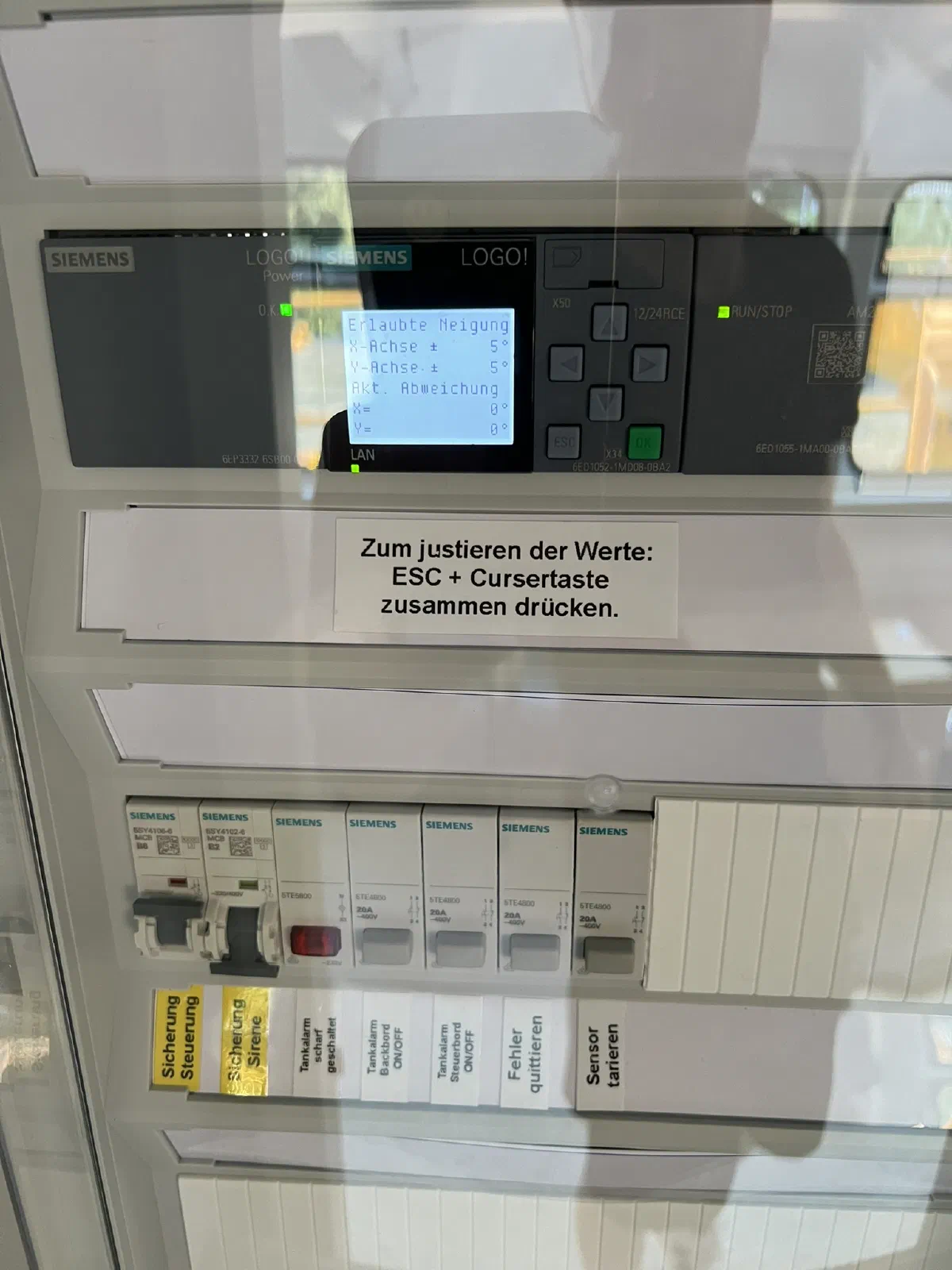
List Monitoring with Siemens LOGO!
A vessel permanently moored at a pier can develop a critical heel due to leakage, uneven loading, or other causes. To warn the owner at an early stage, a list monitoring system was implemented.
Components:
- Inclination sensor from Pepperl+Fuchs (industrial version)
- Siemens LOGO! as the controller for evaluation, display, and alarm logic
The LOGO! shows the currently permitted inclination as well as the actual deviation on both axes on its display. The system can be zeroed at the press of a button — the ship’s current position is set as the zero point. The threshold values for the X and Y axes are freely adjustable. If a threshold is exceeded, the system reacts in two stages:
- Audible alarm on board (shared buzzer with the tank fill-level alarm)
- Email notification, which can be automatically processed as a call or SMS
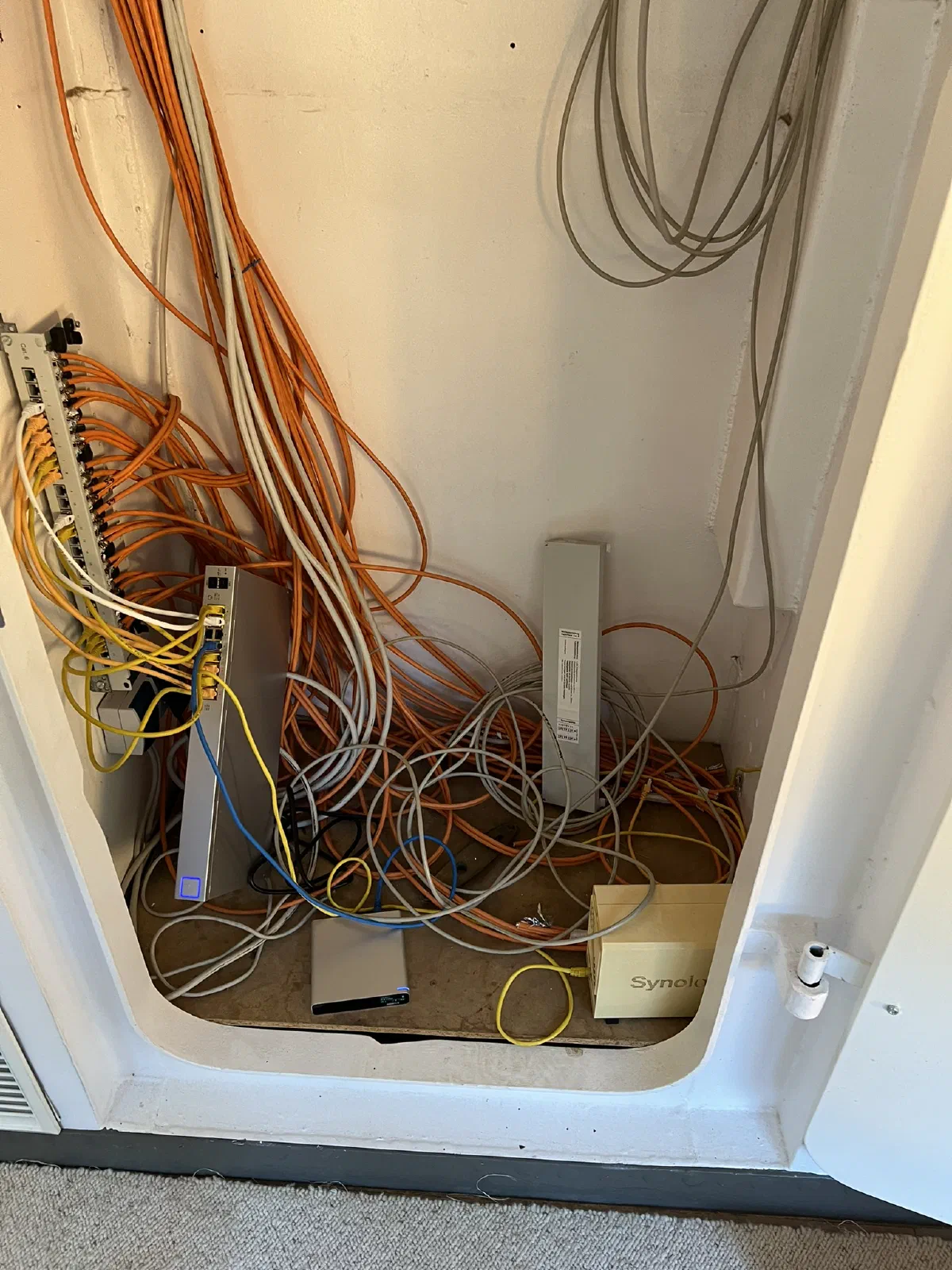
Network Installation: From Cable Clutter to a Tidy Rack
At the same time, the existing network installation on board was reorganized. Over the years, the cabling had grown into a confusing tangle — troubleshooting and extensions would have been correspondingly time-consuming. All active and passive components were structured in a 19-inch server rack and the cables cleanly routed.