
The Solution
One of the most common situations in industry: a system behaves incorrectly, but nobody knows why. The fault only occurs under load, only at certain temperatures, only after 8 hours of operation. Intermittent, hard to reproduce, expensive.
The problem: electrics, mechanics, and software are often examined by different specialists — in silos. Someone who understands both and knows the interactions is rare. That is exactly the approach of Ampere Partner.
Methodology: Systematic Rather Than Intuitive
Fault finding is not guessing. The methodology:
1. Structure the symptom description — When does the fault occur? Under what conditions? What exactly does the system show? This analysis often already clarifies which area the cause lies in.
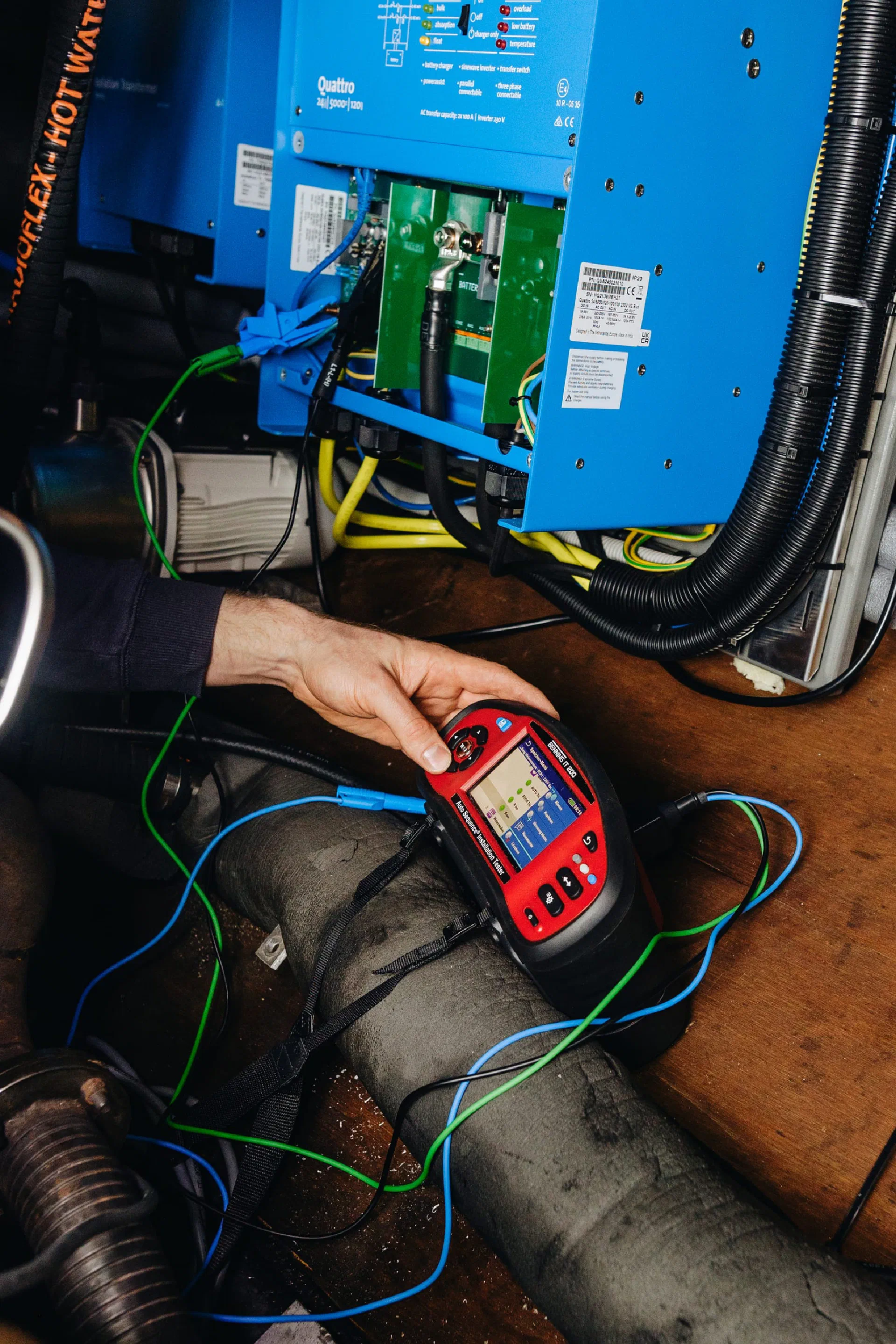
2. Collect data — Read PLC logs, measure voltage curves, record sensor values. Faults that hide leave traces.
3. Test hypotheses — Each possible cause is methodically excluded or confirmed. No guessing, no assumptions without evidence.
4. Prove the cause — The cause is not just named but proven through measurement or targeted program intervention.
5. Recommend actions — Short-term and long-term remedial measures, prioritized by effectiveness and effort.
Typical Fault Patterns
- Machine parts that “hammer” or rattle for no apparent reason
- Variable frequency drive faults that cannot be reproduced
- PLC programs that suddenly behave differently after years
- Sensors that appear to deliver incorrect values
- Systems that only function correctly after a cold start
- Faults that only occur at full load